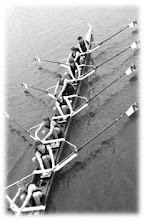
Varsity Boys Summary:
1st in the First Varsity 8+
1st in the Second Varsity 8+
1st in the Mixed 8+
2nd in the Varsity 1x
2nd in the Varsity 2x
4th in the Second Varsity 8+
5th in the Varsity 4+
15th in the Varsity 4+
Boys Jr 1x
1 Saratoga (Braga) 13:06
2 Niskayuna (Howe) 13:17
3 Saratoga (Stein) 13:30
4 Albany (Timmons) 13:40
5 Warwick (Balsamo) 13:45
6 Shenendehowa 14:26
7 Hudson River (Heaton) 14:28
8 Saratoga (Bossalini) 14:43
9 Saratoga (Levine) 14:44
10 Hudson River (Sovza) 14:49
11 Saratoga (Palumbo) 14:53
12 Warwick (Kates) 15:30
13 Saratoga (Anderson) 15:36
14 Northwood (Blondeau) 15:39
15 Bromfield (Ginouves) 15:59
16 Burnt Hills (Flacke) 15:59
Hudson River Scratch
Mohawk Scratch
Sagamore Scratch
Sagamore Scratch
Open Mixed 8+
1 Niskayuna 12:28
2 Hudson River 14:03
3 Queensbury 14:12
Boys Jr 2x
1 Bromfield 13:24
2 Niskayuna 13:26
3 Mohawk 13:34
4 Derryfield 13:51
5 Sagamore 14:03
6 Hudson River 14:17
7 Belmont Crew 14:39
8 Cazenovia 15:22
9 Shenendehowa 15:23
10 Saratoga 15:28
11 Saratoga 17:38
Saratoga Scratch
Boys Jr 4+
1 Northfield Mt Hermon 12:25
2 Shaker 12:39
3 Syracuse Chargers 12:42
4 Shenendehowa 12:42
5 Niskayuna A 12:47
6 Saratoga 12:48
7 Manhasset 12:48
8 Manhasset 13:02
9 Saratoga 13:02
10 Bromfield 13:03
11 Northfield Mt Hermon 13:17
12 Burnt Hills 13:20
13 Burnt Hills 13:37
14 Arlington 14:02
15 Niskayuna B 14:04
16 Hudson River 14:28
17 Chaminade 14:52
18 Hudson River 16:00
19 Northwood 16:15
Boys Junior 8+
1 Niskayuna A 12:08
2 Bromfield 12:21
3 Shaker 12:27
4 Arlington 12:33
5 Shrewsbury 12:34
6 Manhasset 12:35
7 Burnt Hills 12:37
8 Niskayuna B 12:56
9 Saratoga 12:59
10 Bromfield 13:37
11 Manhasset 13:37
12 Syracuse Chargers 13:45
13 Niskayuna C 13:45
14 Shenendehowa 13:51
15 Chaminade 13:53
16 Burnt Hills 14:00
17 Shrewsbury 14:06
18 Saratoga 14:16
19 Burnt Hills 16:03
20 Chaminade 16:39
21 Hudson River 18:00
Showing posts with label Training. Show all posts
Showing posts with label Training. Show all posts
Monday, September 28, 2009
Saturday, September 19, 2009
Pulling Together Increases Your Pain Threshold
In the study, published today in the Royal Society journal Biology Letters, researchers from the University of Oxford’s Institute of Cognitive and Evolutionary Anthropology found the pain threshold of 12 rowers from the Oxford Boat Race squad was greater after group training than after individual training.
They conclude that acting as a group and in close synchrony seems to ‘ramp up’ pain thresholds. The underlying endorphin release may be the mechanism that underpins communal-bonding effects that emerge from activities like religious rituals and dancing.
Each of the 12 rowers participated in four separate tests. They were asked to row continuously for 45 minutes in a virtual boat in the gym (as in normal training), in an exercise carried out in two teams of six and then in a separate session as individuals, unobserved by other team members. After each of the sessions, the researchers measured their pain threshold by how long they could stand an inflated blood pressure cuff on the arm.
The study found there was a significant increase in the rowers’ pain threshold following exercise in both individual and group sessions (a well established response to exercise of any kind). However, after the group training there was a significantly larger increase as compared with training carried out individually.
Since close synchrony is the key to successful competition-class racing, these results suggest that doing a synchronised activity as a group increases the endorphin rush that we get from physical exertion. The study says that since endorphins help to create a sense of bonhomie and positive effect, this effect may underlie the experience of warmth and belonging that we have when we do activities like dancing, sports, religious rituals and other forms of communal exercise together.
Professor Robin Dunbar, Head of the Institute of Cognitive and Evolutionary Anthropology at Oxford University, said: ‘Previous research suggests that synchronised physical activity such as laughter, music and many religious activities makes people happier and is part of the bonding process. We also know that physical exercise creates a natural high through the release of endorphins. What this study shows us is that synchrony alone seems to ramp up the production of endorphins so as to heighten the effect when we do these activities in groups.’
Lead author Dr Emma Cohen, from the Institute of Cognitive and Evolutionary Anthropology, said: ‘The results suggest that endorphin release is significantly greater in group training than in individual training even when power output, or physical exertion, remains constant. The exact features of group activity that generate this effect are unknown, but this study contributes to a growing body of evidence suggesting that synchronised, coordinated physical activity may be responsible.’
Thursday, August 27, 2009
Wednesday, August 26, 2009
Balancing Responsibilities
This season is going to be extremely rigorous.
The level of competition among Niskayuna Varsity crews is going to increase as our numbers have grown. Rowers have become much stronger and are training harder in order to achieve greater results. The addition of optional "captain's practices" and evenings in the weight room are adding depth to the team's level of training.
Are you able to maintain this type of training along with all of your other responsibilities? YES; but it will take discipline.
School is your top priority. You must maintain high grades and demonstrate good study habits to succeed academically. Athletes who are able to succeed in school are generally better than athletes who fail. Why? Athletes who can do both know how to balance their time, their focus, and their energy. These skills are very valuable on the field. Therefore, rowers who do well in school are clearly demonstrating their ability to take on greater challenges. Coaches will notice these rowers more.
You may also have obligations outside of school: church, community service, work, or other sports. Again, you cannot let rowing be a distraction. Similarly, it is expected that these other obligations will not distract you from rowing. Develop a schedule that will help you keep all of your responsibilities straight; then, choose to succeed at all of them.
Balance will be the key to succeeding on and off the water. And it should be the goal of everyone to do your best in all your endeavors.
Friday, April 24, 2009


Saturday, April 11, 2009
Holland 8 Training - Reprise
This video of the dutch 8 practicing before the olympics, at which they won the gold, exemplifies many of the technical elements we have been practicing lately: body angles, leg drives, acceleration, and quicker catches.
0:00-1:00 - Body angle at the finish
1:00-2:00 - Catching the blade before driving the legs.
*Notice when the camera is in close on the rowers you can see the blade of the rower in front entering the water before the rower in view is driving. The blade enters the water first.
2:00-3:00 - Emphasis and acceleration on the leg drive - not the finish.
3:00-4:00 - Rating comes up slightly and catches aggresive.
4:00-5:00 - Speed of the oar in the water.
Courtesy of YouTube and Row2k
Friday, April 10, 2009
USRowing Spotlight: Q&A with Colin Campbell
By Allison Frederick
Colin Campbell is returning for his third season as the USRowing junior national team men’s head coach. Last year, he led the junior men’s eight to a bronze medal at the 2008 FISA World Rowing Senior and Junior Championships. Prior to taking over head coaching duties, Campbell served as a junior national team assistant coach, helping the U.S. win gold in the eight in 2005. Before joining Peddie School as the boy’s head coach in 2002, Campbell coached at St. Mark’s School, St. Paul’s School and Cincinnati Country Day School.
USRowing: You’ve coached several past U.S. junior teams and development camps, including last year’s bronze-medal crew. How will your experiences benefit you in building a successful junior team this year? Campbell: I have gotten more and more specific in defining and articulating what athletes need to do to prepare for, and to compete successfully at, the world championship level. I have also worked with Craig Hoffman, the Junior Men's Committee, Steve Hargis, and others at USRowing and around the country to rebuild the development camp structure that I first helped to establish in 1996 and 1997. With the layering of camps and opportunities, oarsmen and coxswains are more aware of what they need to do to prepare for international competition, and they are more experienced when they arrive first at selection camp and then at the world championships. This more extensive preparation should help the athletes prepare more thoroughly and race more effectively.
USRowing: What specific goals do you have for the junior national team this summer? Campbell: We are going to select an eight and a coxed four from the sweep camp and a quad from the sculling camp. We are also going to send two pairs and several doubles to trials. My goals for the summer are to run the most efficient, most effective camp I can, to select and prepare the best possible crews for the competition at the world championships and to win medals in at least two of four events.
USRowing: Can you describe the process for athlete selection from the beginning of the summer, up until the world championships? Campbell: We are going to bring 26 sweep oarsmen and 6 coxswains to Mercer Lake for the sweep camp. From that pool, we are going to build an eight and a coxed four, as well as two pairs that will compete at trials for the right to compete at the world championships. The selection process for the eight and the four will follow roughly the same guidelines we have used in the past four years. We do a lot of work in eights and fours, testing combinations and speed over 1,000-meter, 1,250-meter and 1,500-meter intervals. Using this data and some data from direct switches, we will designate an eight and a four that will compete at the world championships. From the remaining athletes, we will select two pairs, which will then race at trials for the right to compete at worlds.
USRowing: You’ve been the boys head coach at Peddie since 2002. Before that, you coached St. Mark’s School, St. Paul’s School and Cincinnati Country Day School. What do you enjoy most about coaching rowing at the high school level? Campbell: Rowing is a sport that rewards investment and effort. Many of the athletes that I have coached are not gifted physical athletes but have been able to compete very successfully at the high school and collegiate levels through determination and hard work. I have always focused on the commitment that athletes need to bring to their work in rowing, and I have always felt most successful when those athletes who are not exceptionally gifted have performed well.
USRowing: What are some of the biggest challenges of coaching at the junior level? Campbell: It is hard to get juniors to understand that their physical and psychological capacities are far greater than they recognize. Tony Johnson, my college coach, always used to challenge us to work beyond what we believed to be our limits. I think this is the greatest challenge with juniors because they are capable of far greater efforts and far stronger performances than many of them realize. Another challenge is training. High school students are very busy. They have a great deal on their plates, and training properly takes more time, energy, and discipline than many of them want to recognize or are prepared to commit.
Courtesy of USRowing
Saturday Afternoon Jog 4/11
Introducing the Old Niskayuna Loop
Meet outside the main entrance of Van Antwerp MS at 2:30pm
Distance: 5.1 miles

Meet outside the main entrance of Van Antwerp MS at 2:30pm
Distance: 5.1 miles

Thursday, April 9, 2009
The Coach/Athlete Relationship
This verges on the cliche, but it will help clarify for many of you what the relationship between an athlete and a coach is really like. You will see the many facets of the job:
NBA player and former University of Michigan star Jalen Rose attributed much of his success to his high school coach, Perry Watson. "He was more than just a basketball coach. He was my counselor. Any time I'd want to talk, just gain knowledge, I'd take my lunch down to his office and talk, and find out about guys that made it, and guys that didn't, and what I could do to make it."
Mary Scotvold, skating coach to Olympic medalists Nancy Kerrigan and Paul Wylie, said that although you send athletes home at the end of the day, coaching is really a 24-hour-a-day job because you spend your time away from them thinking about ways to help them improve.
According to Georgetown University basketball coach John Thompson, "As a coach, you get involved in the background and the personal lives of your players and you have to be able to deal with more than just what is going on on the court. You have to deal with it. We as coaches are just more aware of what's going on."
Mamie Rallins, a four-time world record holder in the hurdles and a member of the 1968 and 1972 U.S. Olympic teams, described her job as track coach at Ohio State University: "When I coach and recruit for this university, I always try to tell my athletes that I will coach you as if you were coming to a finishing school. When I get through with you, you will know how to dress, eat, do anything else in the world that you want to do."
Runner Michael Johnson, winner of two gold medals at the 1996 Atlanta Olympics, has been with his coach, Clyde Hart, since his days as an undergraduate at Baylor University: "Some people try to find a mentor who will provide everything for them: counseling, companionship, guidance, and discipline. That is too taxing a demand for you and for your mentor. A good mentor--like Coach Hart--offers directions and driving tips from the back seat. You still have to drive the car."
Mike Kennan, former coach of the NHL New York Rangers (the team won the Stanley Cup under his direction) and now with the Vancouver Canucks, talked about his coaching style: "I never had the desire to be liked by everybody. My responsibility is to determine the best abilities a player has and can give me. To do that, it's not necessary to be liked. It's necessary to be respected. Making the choice was not hard for me."
Davin Williams is a three-time Idaho high school state champion in the triple jump. Since eighth grade he has been coached on a volunteer basis by Gerald Bell, a junior high school assistant principal who was a triple jumper at Boise State University. Williams works with him on Sundays. ''He's more than my coach. He's my friend. I can talk to him about anything. He's there. He'll always be there.''
Tuesday, March 31, 2009
Teamwork
There are plenty of sports that depend on teamwork just as much as rowing: football, lacrosse, soccer, basketball, ice hockey, curling, volleyball, water polo, frisbee, paintball, rugby, and many others. In an orchestra, your fellow musicians are your team; and in the work place, your co-workers. To be part of a team simply means that you rely on each other to achieve a common goal.
Why, then, is rowing often considered the "ultimate" team sport? What makes being on a crew unique enough that its level of teamwork supersedes all other sports?
First, in terms of training and exertion, rowing is often compared with cross-country skiing, outdoor cycling, swimming, and running. These sports all require tremendous amounts of endurance, aerobic capacity, and physical strength. They challenge the whole body, every muscle, for the duration of the activity. But these other sports all focus on the individual, whereas rowing focuses on the boat. Therefore, rowers must rely on the endurance, aerobic capacity, and strength of the rowers around them.
Second, every stroke a rower takes is a simple choice: how hard do I pull? Think back to your last 2k erg piece when your body was telling you to give up but you willed yourself to continue. Your quads were in pain but you knew the finish line was only 3 minutes away. You chose to finish (or not). In the boat, you have this decision, too; and you share this decision with all the other rowers. But it is easier to hide this decision behind a deceptively large, frothy puddle, a tense face, or a primal exhale. Therefore, each rower must trust in their fellow oarsman. There must be confidence in each other.
Third, all rowers do the same thing. All of the examples of teams above consist of many individuals with unique roles. The 11 players on a soccer field, for instance, each have a distinct position and mission that, if coordinated, will help the team win. Musicians, also, play on various instruments from various parts to create a total symphony. In the boat, however, every rower is doing the exact same thing. Yes, there are different seat positions, but they are mostly determined by strength, size, and weight. Therefore, rowing is an activity shared by the entire team equally.
Is the teamwork on a crew "ultimate?" Maybe yes, maybe no. But there is no question that rowing embodies many unique elements of teamwork that set it apart.
Wednesday, March 25, 2009
Saturday Afternoon Jog 3/28
Introducing the Grand Boulevard Loop
Meet outside the HS New Cafe entrance at 2:30pm
Distance: 4.3 miles

Meet outside the HS New Cafe entrance at 2:30pm
Distance: 4.3 miles

Tuesday, March 24, 2009
US Men's 8 Technique
The following pictures are all of the United States' Men's 8 training before the Olympics. The US finished 3rd (5:25.34) in Beijing behind Canada (5:23.89) and Great Britain (5:25.11). The memebers of the Men's 8 were: Bryan Volpenhein, Josh Inman, Steven Coppola, Daniel Walsh, Wyatt Allen, Micah Boyd, Matt Schnobrich, Beau Hoopman, and coxswain Marcus McElhenney. Here's a look at their technique:
At the catch - look at their grips, angle of their arms, back splash, high chest, connection of the leg drive, and hand levels.


Through the drive - look at their precision, leg drives, straight arms, lay back, and posture.


On the recovery - look at the outside arm, the wrist, the hands away before the legs come up, and the balance of the boat.


Courtesy of Row2k
Thursday, March 19, 2009
Saturday Afternoon Jog 3/21
The "Ramada Run"
Meet at the boathouse at 2:00pm
Distance: 10k (6.2 miles)

Meet at the boathouse at 2:00pm
Distance: 10k (6.2 miles)

Monday, March 16, 2009
Developing Leadership
To become a better leader is not as difficult as you might think.
We all know qualities of good leadership: confident, courageous, dedicated, enthusiastic, honest, inspiring, patient, prepared, reliable, respectful, supportive, and many others. As varsity rowers, positive leadership is constantly reinforced because it will impact the success of the team and of Niskayuna Rowing.
Leadership, then, is as simple as making decisions. That's it. There's no need to complicate it further; the good leader makes good decisions, and the bad leader, bad decisions. Therefore, to become a better leader you need to become more aware of the decisions you make.
As rowers, you are making decisions all the time (leaders in the making). How hard are you going to pull on the oar? Will you give up for a stroke? Will you give up after a power 10? Will you distract during warm up? Will you stop drinking soda and eating candy? Will you get enough rest? Will you get your homework done and stay on top of school work? (And our goal) Will you do what it takes to make your boat go faster?
You have all made these and other choices at some point. In a race, you are making choices almost every second: do I look? do I pull? do I have ratio? do I reach? do I listen? do I sprint? Leaders are needed in rowing. In fact, the best boats will be full of leaders. Not loud-mouthed rowers stepping on each other's toes and yelling over each other's ideas, but individuals who understand good decision-making.
Rowers: first, make decisions; second, make good decisions. The confident person chooses confidence. The courageous, courage. And the dedicated, dedication. Leadership is in your control.
Friday, March 13, 2009
Saturday Afternoon Jog 3/14
"Blatnick to Bridge"
Meet at the Blatnick parking lot at 2:30pm
Distance: 5 miles

Meet at the Blatnick parking lot at 2:30pm
Distance: 5 miles

Thursday, March 12, 2009
Precision Rowing
It is time for the Niskayuna Varsity Boy's team to move beyond the idea of "timing" and more towards that of "precision."
Timing, for all intents and purposes, limits most rowers to two points in the stroke: catch and finish, the beginning and the end. But the catch and finish, though important, account for only a very brief part of the stroke cycle - mere hundredths of a second. Unfortunately, so much else that happens in between, including drive speed, body swing, arms away, and breathing, is often lost to this focus on just the catch and finish.
Precision, on the other hand, is what most coaches mean when they talk about timing. Precision is timing, synchronicity, body angles, and power all wrapped up into one. Precisions is:
Courtesy of YouTube and not an endorsement of the US Marine Corps
Timing, for all intents and purposes, limits most rowers to two points in the stroke: catch and finish, the beginning and the end. But the catch and finish, though important, account for only a very brief part of the stroke cycle - mere hundredths of a second. Unfortunately, so much else that happens in between, including drive speed, body swing, arms away, and breathing, is often lost to this focus on just the catch and finish.
Precision, on the other hand, is what most coaches mean when they talk about timing. Precision is timing, synchronicity, body angles, and power all wrapped up into one. Precisions is:
- driving the legs down together from the catch;
- waiting to open your body with the rest of the boat;
- swinging at the same time;
- matching your body angles at the finish;
- pushing the arms away at the same speed;
- leading the recovery with your body; and
- controlling your legs up the recovery;
- balancing your reach over the rigger;
- inhaling just before taking the catch; and
- exhaling right at the finish with your crew;
- applying consistent pressure every stroke; and
- accelerating as one boat; and, of course
- getting the blade in and out of the water together.
Below is a good example from the US Marine Corps of precision.
Courtesy of YouTube and not an endorsement of the US Marine Corps
Sunday, March 8, 2009
Where to Breathe
For the most part, rowers should be breathing twice per stroke - whether at a rate 18 or a rate 40. The following sequence of pictures should help you understand where to breathe during the stroke cycle:
Coming up from the finish:

From the big inhale at the catch:

Through the big exhale at the finish:

Coming up from the finish:

From the big inhale at the catch:

Through the big exhale at the finish:
Friday, March 6, 2009

Thursday, February 26, 2009

Saturday, February 21, 2009
Saturday Afternoon Jogs
This invitation to participate in "Saturday Afternoon Jogs" is for all rowers, parents, siblings, friends, and supporters of the Niskayuna Varsity Boy's team.
For the rowers, the purpose behind the SAJs is cross-training and endurance building. To be fast and first across the finish line, the varsity boys will need to have a well-developed aerobic base. Long-distance rows during practice, complemented by these 3 to 6 mile jogs on the weekend, will help bring us to the necessary level of fitness.
For everyone else, this is your excuse to get in some exercise, run through the neighborhoods, traverse the paths along the river, and be a part of Niskayuna Rowing.
Because we are not a cross-country team, the pace will not be aggressive; but you can always slow down (or speed up) to meet your personal needs. I will announce the time and location of our rendezvous, along with the intended route, every week on the blog and via email. Most runs will start around 2:30pm with one or two exceptions.
I hope to see many of you each Saturday.
Subscribe to:
Posts (Atom)