By Allison Frederick
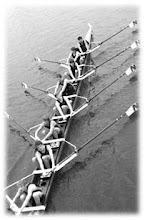
Colin Campbell is returning for his third season as the USRowing junior national team men’s head coach. Last year, he led the junior men’s eight to a bronze medal at the 2008 FISA World Rowing Senior and Junior Championships. Prior to taking over head coaching duties, Campbell served as a junior national team assistant coach, helping the U.S. win gold in the eight in 2005. Before joining Peddie School as the boy’s head coach in 2002, Campbell coached at St. Mark’s School, St. Paul’s School and Cincinnati Country Day School.
USRowing: You’ve coached several past U.S. junior teams and development camps, including last year’s bronze-medal crew. How will your experiences benefit you in building a successful junior team this year? Campbell: I have gotten more and more specific in defining and articulating what athletes need to do to prepare for, and to compete successfully at, the world championship level. I have also worked with Craig Hoffman, the Junior Men's Committee, Steve Hargis, and others at USRowing and around the country to rebuild the development camp structure that I first helped to establish in 1996 and 1997. With the layering of camps and opportunities, oarsmen and coxswains are more aware of what they need to do to prepare for international competition, and they are more experienced when they arrive first at selection camp and then at the world championships. This more extensive preparation should help the athletes prepare more thoroughly and race more effectively.
USRowing: What specific goals do you have for the junior national team this summer? Campbell: We are going to select an eight and a coxed four from the sweep camp and a quad from the sculling camp. We are also going to send two pairs and several doubles to trials. My goals for the summer are to run the most efficient, most effective camp I can, to select and prepare the best possible crews for the competition at the world championships and to win medals in at least two of four events.
USRowing: Can you describe the process for athlete selection from the beginning of the summer, up until the world championships? Campbell: We are going to bring 26 sweep oarsmen and 6 coxswains to Mercer Lake for the sweep camp. From that pool, we are going to build an eight and a coxed four, as well as two pairs that will compete at trials for the right to compete at the world championships. The selection process for the eight and the four will follow roughly the same guidelines we have used in the past four years. We do a lot of work in eights and fours, testing combinations and speed over 1,000-meter, 1,250-meter and 1,500-meter intervals. Using this data and some data from direct switches, we will designate an eight and a four that will compete at the world championships. From the remaining athletes, we will select two pairs, which will then race at trials for the right to compete at worlds.
USRowing: You’ve been the boys head coach at Peddie since 2002. Before that, you coached St. Mark’s School, St. Paul’s School and Cincinnati Country Day School. What do you enjoy most about coaching rowing at the high school level? Campbell: Rowing is a sport that rewards investment and effort. Many of the athletes that I have coached are not gifted physical athletes but have been able to compete very successfully at the high school and collegiate levels through determination and hard work. I have always focused on the commitment that athletes need to bring to their work in rowing, and I have always felt most successful when those athletes who are not exceptionally gifted have performed well.
USRowing: What are some of the biggest challenges of coaching at the junior level? Campbell: It is hard to get juniors to understand that their physical and psychological capacities are far greater than they recognize. Tony Johnson, my college coach, always used to challenge us to work beyond what we believed to be our limits. I think this is the greatest challenge with juniors because they are capable of far greater efforts and far stronger performances than many of them realize. Another challenge is training. High school students are very busy. They have a great deal on their plates, and training properly takes more time, energy, and discipline than many of them want to recognize or are prepared to commit.
Courtesy of USRowing
Showing posts with label The Rower's Thoughts. Show all posts
Showing posts with label The Rower's Thoughts. Show all posts
Friday, April 10, 2009
Thursday, February 12, 2009
Winter Training Reflection and Realization
Winter training for crew is a time for personal gain and development. This contrasts with the Spring and Fall seasons where team growth (or boat) is stressed the most. Winter is a time to improve your technique and power, in that order. Over the past 10 weeks or so of winter training my technique did not improve much. In some instances it may have gotten worse.
After starting a workout and becoming fatigued very quickly I was told it was due to my sloppy technique. In the beginning, my technique was hard to change. At first I felt like I did not have the power to hold the aggressive splits I had aspired to do. After becoming frustrated, I was approached by my coach and told that the right technique holds significantly more potential then wrong technique. For me it was maintaining forward body angle and opening up with the arms before the legs.
My error was that I was losing so much potential power on my drive. After 30 minutes of aggressive 75% pressure erging with proper technique I was able to apply my learned technique to my stroke efficiently. The next day I was scheduled to erg a mock 2k in preparation for the upcoming Crash-B erg competition. I was told to row at a set split while using the technique learned the previous day. As it turns out, the technique, although uncomfortable at first helped tremendously in the long shot. I finished the piece at a 1:42.9 average split and a PR.
This was amazing for me. I was only lightly fatigued, so I think I could have rowed seconds faster. I cannot stress the importance of proper technique to other rowers who lack it, or feel that technique is limiting their potential. You need to start at square one when you change. Try not to get frustrated and just ignore the screen. Power will come with time and repetition. After a while it will just feel natural and be smooth enough for you to increase the speed and power without breaking technique. My change in technique helped me tremendously and made me realize my true potential if it is kept.
Courtesy of Eli
After starting a workout and becoming fatigued very quickly I was told it was due to my sloppy technique. In the beginning, my technique was hard to change. At first I felt like I did not have the power to hold the aggressive splits I had aspired to do. After becoming frustrated, I was approached by my coach and told that the right technique holds significantly more potential then wrong technique. For me it was maintaining forward body angle and opening up with the arms before the legs.
My error was that I was losing so much potential power on my drive. After 30 minutes of aggressive 75% pressure erging with proper technique I was able to apply my learned technique to my stroke efficiently. The next day I was scheduled to erg a mock 2k in preparation for the upcoming Crash-B erg competition. I was told to row at a set split while using the technique learned the previous day. As it turns out, the technique, although uncomfortable at first helped tremendously in the long shot. I finished the piece at a 1:42.9 average split and a PR.
This was amazing for me. I was only lightly fatigued, so I think I could have rowed seconds faster. I cannot stress the importance of proper technique to other rowers who lack it, or feel that technique is limiting their potential. You need to start at square one when you change. Try not to get frustrated and just ignore the screen. Power will come with time and repetition. After a while it will just feel natural and be smooth enough for you to increase the speed and power without breaking technique. My change in technique helped me tremendously and made me realize my true potential if it is kept.
Courtesy of Eli
Sunday, January 25, 2009
Narration of 1996 Olympic Victory
Xeno Muller shares his thoughts and gold medal strategy during this 1996 olympic 1x race.
Courtesy of YouTube
Courtesy of YouTube
Saturday, January 3, 2009
Rowing 3x2000 Meters
The challenge in operating a dryland training program with rowers whose skills and abilities vary so much is ensuring that everybody is improving while nobody feels left behind. Accordingly, Niskayuna's rowers train based on a 3 x 2000 meter erg test. From this test, an average split is calculated and it is around this value that most practices are measured. After a few weeks, the 3x2k test is repeated and a new split (if faster) becomes the new measuring stick.
There is nothing easy about this test; it requires the rower to plan ahead more than usual. Rowers must take into consideration their physical strength and endurance, their rate of recovery, and their strategic approach. For the latest 3x2k test, the rowers were asked to give their feedback. Their responses are below. This blog post will continue to be updated as more rowers respond. Enjoy.

(Zack) Today's 3x2k erg piece was extremely challenging. Out of all three pieces the first was the easiest. I cruised right through with a consistent split and didn't sprint at the end. Without the sprint at the end I wasn't so tired, and knew I had enough energy to do the next piece. The second 2k was a lot worse than the first. I felt pretty good through the first 1000m, but when I got to the 900m mark I hit a wall. At the end of the piece I finished a couple tenths of a second faster, but I was a lot more tired than I was after the first piece. On the final 2k I pulled a second higher than my average split for the previous 2ks. I held that until the 1000m mark and then I dropped it back down to the average split of my other pieces. Then at the end of my final piece I sprinted at the 200m and finish with a average split a whole second below my two previous ones. I think that cooling down after everyone of my pieces helped a lot. After each piece I rowed about 150m really slow and with a really high split. This cool down helped me recover by getting my breathing under control after the piece.
(Eli) This workout is brutal because you cannot go your fastest on the first piece and have no energy for the second; but at the same time if you achieve a low split on the first, then you must balance the other two. Going into the pieces you must be physically and psychologically prepared. Physically, you need to know your boundaries and strength in order to be efficient while on the erg. Psychologically, you need to know that at some point on the second piece you will hit a wall, a boundary that will prohibit you from going faster. It is necessary to know this in your mind beforehand so that when you meet this “wall” you have a game plan and the mental sense to smash through it. Personally, I felt pain about a quarter ways through the second piece. It is right after a successful first piece that you realize there is 2 more to go and your morale is drained. The one thing I learned from doing these pieces is persevere no matter what. My second time was a lot slower than my first, but after 750 meters on the third, something clicked. The barrier was broken and ignoring the pain I finished the piece a second under my previous average split.
(Andrew) The 3X2k workout is one of the most important workouts we do. It sets the bar for workouts to come, and as we do them shows our progress from the last time we did them. My basic strategy for all three was to come up with a split that I would hold consistently. I found this strategy possible for the entire first one because I was not tired yet, I was well stretched and warmed up. Going into the second piece I had the same sort of plan, but at exactly 850 meters into it I hit a wall. This was a wall that I had to overcome by re-evaluating my strategy. My new plan was to hold the rest of the piece at a 1:47 or under which was two seconds higher than my original plan. At the end of both my first and second pieces I did not sprint, I held the same rating (if not slower) and held a split just under where the average had been. After I got off the erg on the first two pieces I was not completely dead, just sore mostly in my quads and of course I was sweating like crazy. Going into the third piece I hit the same sort of wall that I hit about half way through the second before I even started the piece. I was sitting on the erg getting ready to pull the last piece and all of the physical exhaustion suddenly hit me. I was not able to recover from this exhaustion until almost halfway through the last piece, and when I did recover I believe that those last 1000 meters of the last piece were my favorite meters out of all 6000 pulled. On the final 250m I sprinted, it was one of those all out, kya type of sprints. It felt good. I find this work out to be one of the most painful we do, but I felt great after it. My fastest was the first (the easiest) my second was the slowest (the hardest) and the last was the second fastest (my favorite).
Subscribe to:
Posts (Atom)